

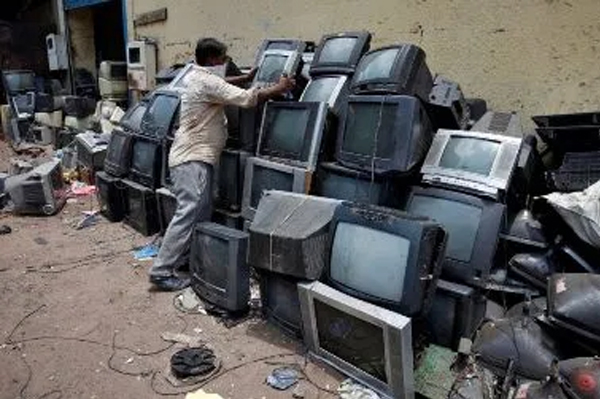
New Delhi: India generated 3.2 million metric tonnes of e-waste last year alone, making it the third largest contributor to e-waste in the world.
The problem of e-waste and the regulatory steps to deal with it were discussed at a webinar on Wednesday which was organized jointly by Karo Sambhav, the first and only Asian Producer Responsibility Organization member to join the WEEE Forum, and the U.S.-India Business Council (USIBC).
The Global E-Waste Monitor identifies e-waste as the fastest growing waste stream in the world. With the implementation of the E-Waste Management Rules in 2016, India has taken regulatory steps to address this issue. However, stakeholders across the spectrum need to come together to take responsibility for improving e-waste management by enabling better collection and working towards responsible recycling.
This year, India joined 40 other countries to observe International E-Waste Day, which was launched by the WEEE Forum in 2018 to improve awareness and concentrate on effective solutions to manage E-waste.
E-waste streams contain many valuable and critical materials, like gold, copper, and iron and rare earths-making it a rich urban source of elements. Recovering these materials can bolster a secondary materials market and reduce reliance on virgin material sources.
